
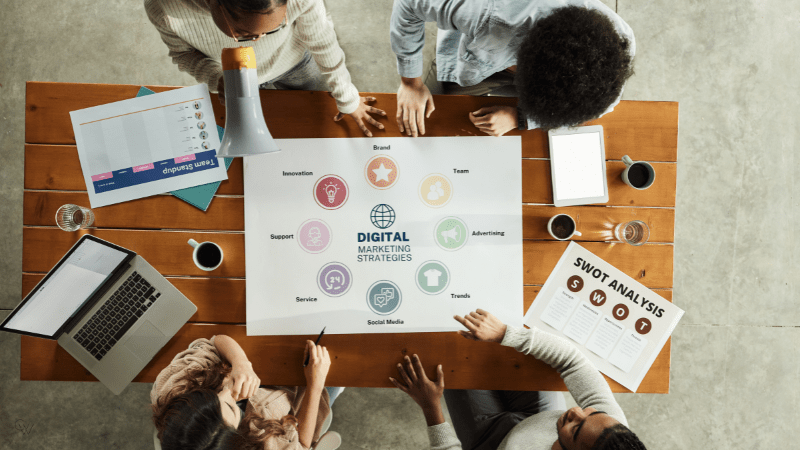
Understanding Digital Marketing Communications
In today’s hyperconnected marketplace, a robust Digital Marketing Communications (DMC) strategy is not merely advantageous—it is essential. As marketing professionals, we must navigate an increasingly complex digital landscape where consumer attention is fragmented across multiple platforms. Read on as we explore the fundamentals of DMC Strategy.

The Role and Purpose of DMC Strategy
At its core, a Digital Marketing Communications strategy serves as the architectural blueprint for how an organisation communicates with its target audiences across digital channels. Unlike traditional marketing approaches, DMC requires integration across multiple platforms while maintaining message consistency and brand cohesion.
The primary purpose of a DMC strategy is threefold:
- 1. Audience Engagement: To establish meaningful connections with consumers by delivering relevant content across appropriate digital channels.
- 2. Brand Positioning: To reinforce brand identity and differentiation in an increasingly crowded marketplace.
- 3. Conversion Optimization: To guide prospects through the customer journey efficiently, from awareness to consideration to purchase.
A well-crafted DMC strategy aligns marketing efforts with business objectives, ensuring that each communication serves a specific purpose within the broader marketing ecosystem, creating a cohesive customer experience across multiple touchpoints.
Understanding the DMC Environment
Today’s DMC environment is characterised by rapid technological evolution, changing consumer behaviours, and increasing data availability. Some key dynamics are:
- Platform Proliferation: The digital landscape encompasses websites, social media, email, search engines, mobile applications, and emerging channels like voice assistants and virtual reality. Each platform has unique audience characteristics and communication conventions. For example, Instagram’s visual format demands high-quality imagery and concise messaging, while LinkedIn requires more professional, value-driven content. America now has a social media penetration of 91.56% of the population; with Gen Z users spending 3 hours across platforms each day.
- Audience Fragmentation: Consumers divide their attention across multiple devices and platforms. This necessitates an omnichannel approach that delivers consistent experiences regardless of how audiences interact with the brand. Nike successfully implements omnichannel marketing by ensuring that customers have seamless experiences whether they engage via their mobile app, website, social media, or physical stores. Companies providing strong omnichannel experiences achieve 91% greater year-over-year customer retention rates. (McKinsey & Company, 2022).
- Data-Driven Decision Making: The availability of real-time analytics enables marketers to measure engagement, optimise campaigns, and demonstrate ROI with unprecedented precision. Spotify exemplifies this approach by leveraging listener data to create personalised playlists and recommendations while providing artists with audience insights through Spotify for Artists. Companies using big data for B2B sales are 15% more profitable, and those implementing AI to crunch data are 5% more profitable.
- Content Consumption Patterns: Audiences increasingly prefer visual and interactive content formats with personalised relevance delivered at moments of high intent. TikTok’s explosive growth demonstrates the shift toward short-form video content. Short form content now generates 66% more qualified leads per year compared to other formats.

The DMC Mix and Its Strategic Application
The Digital Marketing Communications mix comprises various elements that must be strategically integrated:
- Paid Media: Including display advertising, sponsored content, paid search, and social media advertising. These elements provide scale and precision targeting but require ongoing investment.
- Owned Media: Encompassing websites, blogs, email databases, and social media profiles. These channels offer control and cost-efficiency but demand consistent content creation and maintenance.
- Earned Media: Covering public relations, organic social sharing, reviews, and word-of-mouth. These components build credibility but are less controllable than other elements.
- Shared Media: Including co-created content, influencer partnerships, and community engagement. The optimal application of this mix involves:
- Allocating resources based on audience behaviors and objectives
- Sequencing communications to support the customer journey
- Measuring performance to continuously refine channel strategy

Content marketing success depends on strategic integration across these channels rather than siloed approaches to digital communication. The most effective brands create seamless experiences by thoughtfully connecting these elements through a Social Media Integration plan.
As the digital landscape continues to evolve, the ability to develop and implement effective DMC strategies will remain a critical competency for marketing professionals seeking to drive business growth and build lasting customer relationships.
By leveraging this comprehensive approach to DMC strategy, marketing professionals can create integrated campaigns that maximise impact across the digital ecosystem. A Digital Marketing Communications Strategy is just one part of your marketing plan. Check out our other posts for more tips and insights.
 ClickWise